Amplify is the task where we were introduced to unity, in our aim to go from physical to digital
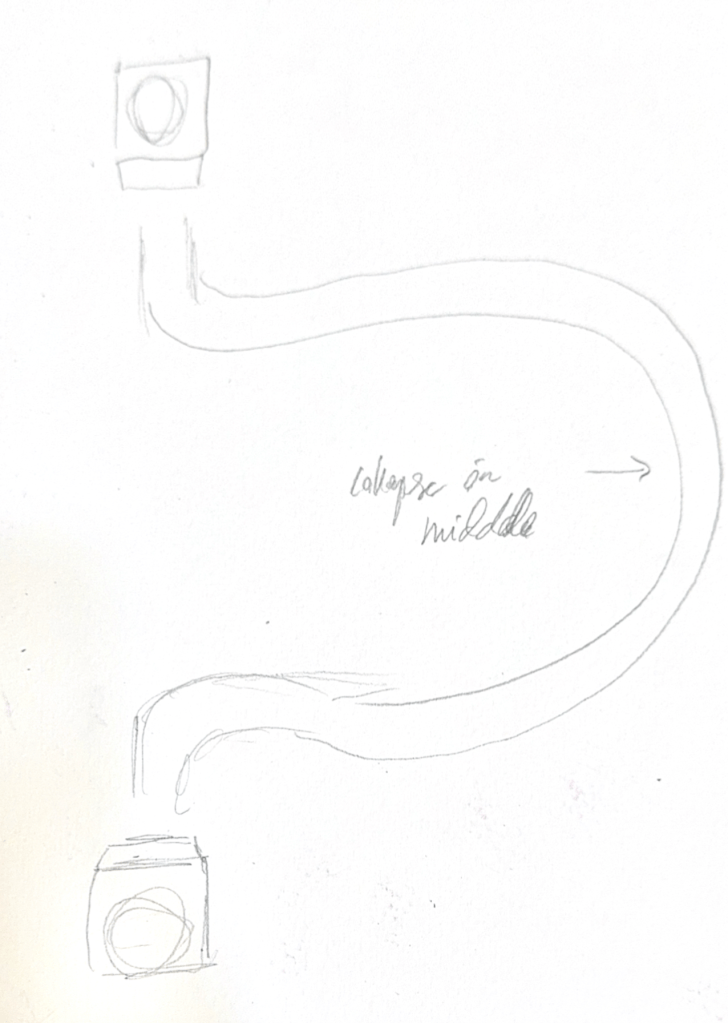
Initial sketch of the game
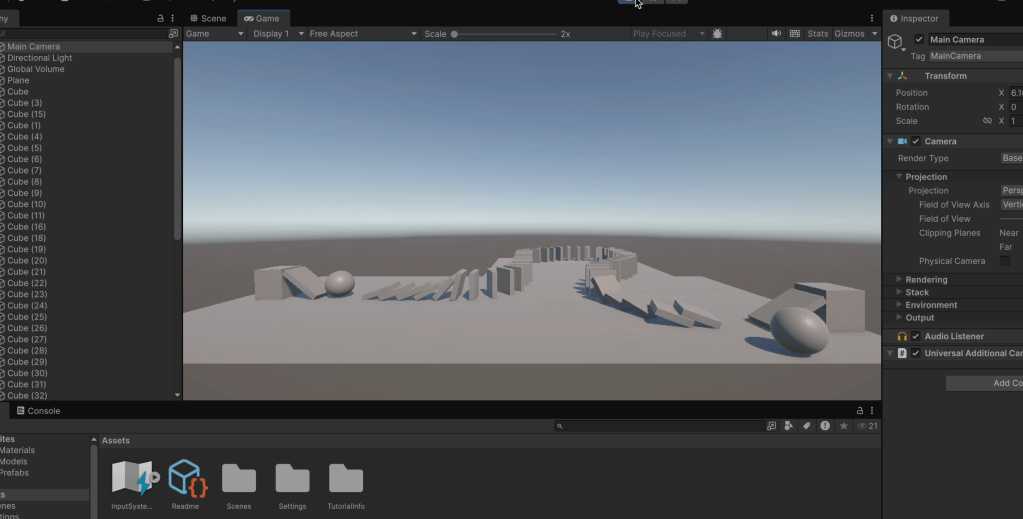
Full screen recording is available on Moodle
I spent time in Unity to develop an interactive domino game for the Amplify task which proved to be one of the most challenging yet fulfilling assignments throughout the entire course. The scene contained two spheres which rested on top of two cubes which stood at opposite ends of the setup. The spheres started to move from the ramps which led them to strike two different dominos lines until they reached the point where they touched each other exactly in the center. The Unity development process for this concept involved extensive testing and required problem-solving because it seemed straightforward at first.
The main difficulty I faced involved using physics within the Unity environment. I needed to test various mass values and friction levels and bounciness settings to achieve the perfect momentum for the spheres which would start the chain reaction without causing the dominos to fly out of control. The experience showed me how one wrong variable in the scene would make the entire sequence fail because a small rotation mistake or a collider size that is too large would cause the entire sequence to fail.
The process taught me valuable information about colliders which proved their critical role in developing realistic interactive experiences. The system required me to modify box colliders for cubes and mesh and capsule colliders for dominos and sphere colliders for balls to achieve proper system operation. The discovery of how colliders establish physical boundaries for objects transformed my entire perspective about digital form creation. The experiment showed me how digital physics duplicates actual physical processes yet it produces exaggerated errors when any part of the experimental setup is not exactly right.
The assignment required me to develop mechanical thinking abilities while generating innovative solutions. The experience deepened my knowledge about digital simulation systems and their timing mechanisms and object interaction behavior while showing me the extensive work required to create basic digital motion that appears authentic.
